
Loft Conversion Guide
CG Carpentry is proud to operate as an independent local business, providing 100% honest and impartial advice on all aspects of loft conversions.
In our loft conversion guide, you’ll find a concise yet practical information on the most important points to consider when planning a loft conversion.
If you’re unable to find the information you need in our loft conversion guide, simply contact a member of the team at CG Carpentry anytime for a chat. Whether ready to go ahead or simply considering a future loft conversion, we’d be delighted to hear from you.
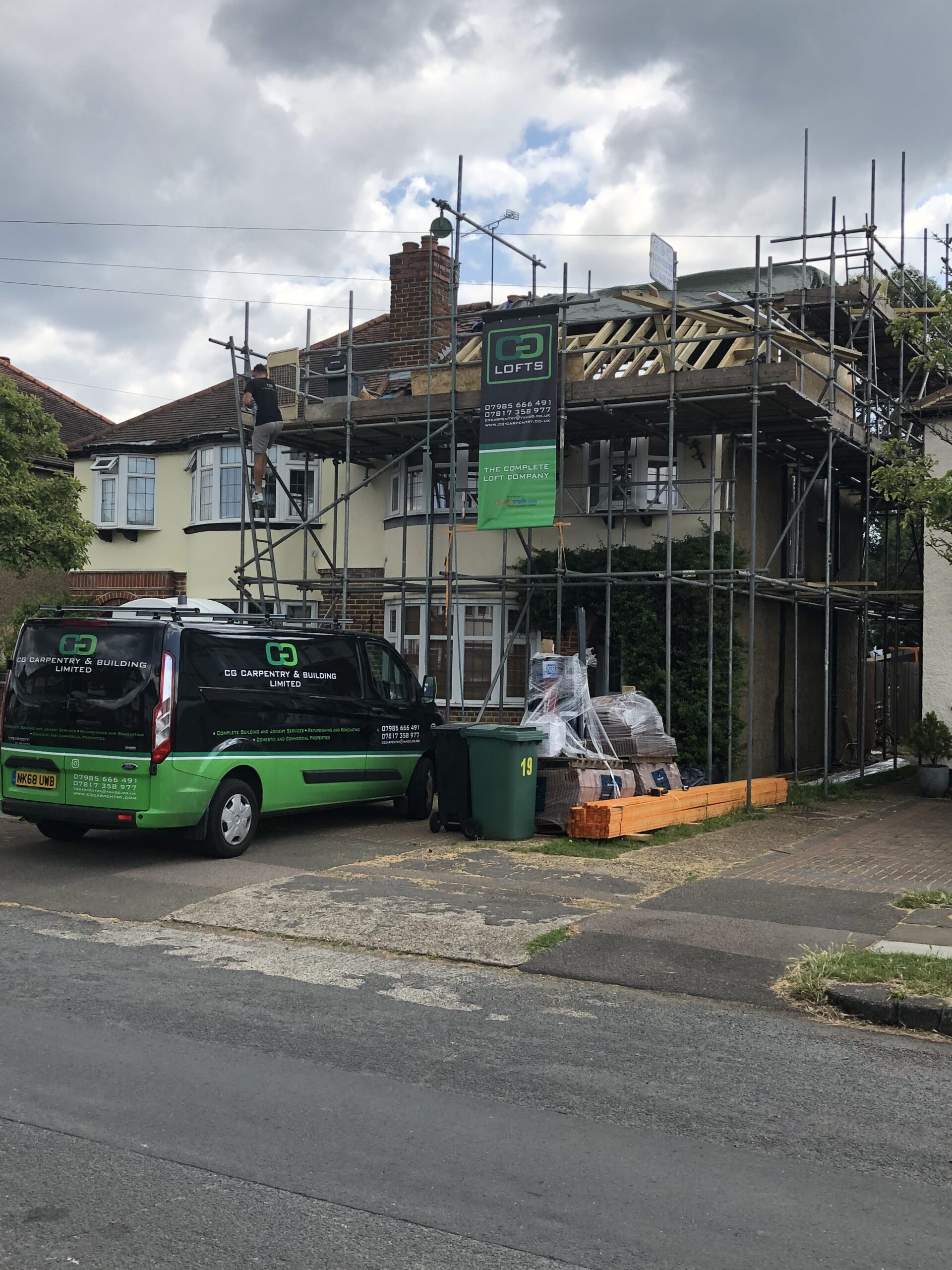

Things to Consider Before you Start
Prior to getting started with a loft conversion, there are several key points to consider. The most important of which being as follows:
- Can my loft be converted?
- How much will it cost?
- Will I need planning permission?
- What types of loft conversion should I choose?
- Should I hire an architect?
- How do I choose the best builder?
You’ll find more detailed information on some of these key considerations below. Alternatively, contact a member of the team at CG Carpentry to discuss any aspect of loft conversion in more detail.
Can my loft be converted?
Before doing anything else, you’ll need to assess whether or not your loft is suitable for a conversion. As you may not be able to carry out the necessary inspection and evaluation yourself, you’ll need to organise a survey of your property and existing loft space. Call CG Carpentry anytime to book a loft conversion survey at a convenient time and date.
Look for other conversions on your street
If your home is similar to other properties on your street, it’s worth noting whether any of your neighbours have converted lofts. If so, there’s a good chance your home will be suitable for a similar loft conversion. If you’re on good terms with your neighbours, you could also pop over and ask a couple of questions about their converted loft.
Check if you have sufficient height
It’s also important to establish whether there is sufficient vertical space available in your loft to accommodate your needs. This depends entirely on the type of loft conversion you’re considering and your intended use for the available space. For obvious reasons, a practical living space needs to be significantly larger than a basic additional storage space. This will be assessed and considered as part of your pre-loft conversion survey.
Check if your house structure can take the extra weight
Likewise, it can be difficult to ascertain whether or not your home’s structure can accommodate the extra weight of a loft conversion. An in-depth check of the property’s existing structure and general integrity will be necessary, in order to ensure the subsequent loft conversion is safe and fit for purpose.
What Type of Loft Conversion is best for your property?
The shape, size and general specification of the property will determine which types of loft conversions are appropriate. You may have the freedom of choosing between several different types of loft conversions, or it could be that only a basic loft conversion is possible.
At CG Carpentry, we take a flexible and creative approach to every loft conversion project we take on. By conducting a detailed inspection of your property and your available loft space, we’ll help you choose the ideal conversion type to suit your preferences and your budget.
All while boosting the comfort, safety, practicality and kerb appeal of your home.
Roof Light Conversions
Roof light conversions are almost always the cheapest, quickest and easiest of all loft conversions. No major structural alterations are necessary, as roof light conversions simply involve the installation of skylight windows, a suitable floor covering and a staircase for accessibility. Roof light conversions are suitable for large lofts with a relatively robust existing structure.
Dormer Conversions
Dormer conversions result in the creation of additional space that extends from the sloping side of a roof. Flat roof dormer conversions can also be relatively quick and straightforward to carry out, adding floor space and headroom to the loft for improved practicality. A dormer conversion can be customised to suit the vast majority of lofts and roof types.
Hip-to-Gable Conversions
Hip-to-gable conversions are only suitable for a detached and semidetached properties, as there needs to be a free sloping side roof to perform the conversion. A hip-to-gable conversion extends the ‘hip’ roof at the side of the home, resulting in a gabled wall to maximise interior space. Hip-to-gable conversions are considered extremely attractive features, significantly contributing to overall market values.
Mansard Conversions
A mansard conversion runs across the entirety of the roof of the property, altering the roof slope angle to an almost vertical incline. While mansard conversions are among the most costly and complex to carry out, they can nonetheless create an exceptional amount of additional space within the property.


Do I need an Architect for my Loft Conversion?
Hiring an architect to help your ideal loft conversion is entirely optional. Working with a leading loft conversion specialist like CG Carpentry, you’ll have the opportunity to choose from an extensive range of loft conversion types and have your ideal loft conversion package tailored from scratch.
While hiring an architect to assist with the initial design process is an option, it isn’t considered mandatory. Whether you already have a vision in mind for your perfect loft conversion or could use a little inspiration from the experts, our experienced design team has you and your property covered.
Do I need Planning Permission for my Loft Conversion?
Planning permission requirements vary significantly from one property and project to the next. It is therefore important to establish your obligations regarding planning permission, before starting your loft conversion.
At CG Carpentry, we can provide all the support and advice you need to determine whether or not you need to obtain planning permission. If so, we’ll also assist with the application process to ensure your project gets underway as quickly and smoothly as possible. Call anytime if you have any questions or concerns regarding planning permission for a loft conversion.


Choosing a Builder for your Loft Conversion
Choosing a builder for your loft conversion isn’t something to be taken lightly. As this is a major property improvement project that will affect your home’s comfort, practicality, safely and value, it’s essential to make the right choice.
Ask to see examples of their previous work, speak to past customers to assess their reputation in your local area. More importantly, ensure all work carried out is covered by an extensive warranty, along with guarantees of both quality and value for money.
It’s also important to stick exclusively with loft conversion companies that stand by their quotations, with no added extras or hidden costs to worry about.
What Warranty should I expect from the Builder
All loft conversion specialists have their own unique policies on warranties and satisfaction guarantees. As an absolute minimum, you should expect no less than an 1 year warranty, comprehensive support and aftercare provided throughout this period.
A warranty is an indication of confidence and responsibility on the part of the builder. The longer the warranty, the greater their confidence in the quality, safety and long-term value for money of their services.
Builders, contractors and construction companies offering shorter warranties should be approached with caution – those who offer no warranty whatsoever should be avoided altogether.


Why you should consider CG Carpentry
At CG Carpentry, we let the quality of the work we carry out speak for itself. Specialising in bespoke carpentry packages to suit all requirements and budgets, we also cover every project with an extensive 2 year warranty and comprehensive aftercare for total peace of mind. We’re also proud to adopt a pressure-free, obligation-free approach to the advice and consultancy we provide.